
Introduction
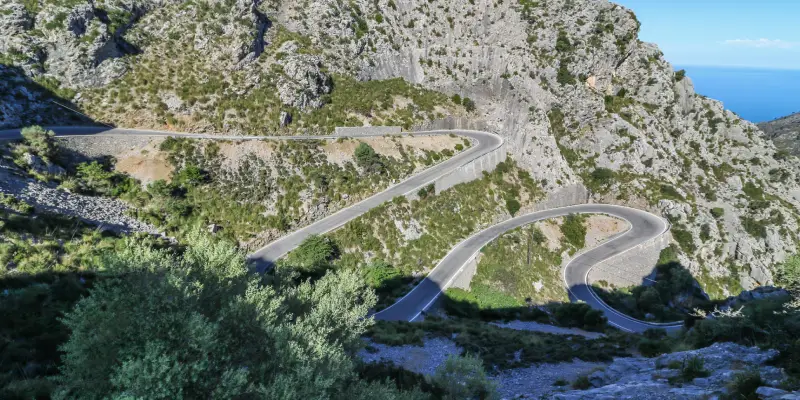
Sa Calobra is arguably Mallorca’s most famous road and one of the most iconic climbs in European cycling. Located on Mallorca’s rugged northwest coast in the Serra de Tramuntana mountains, the village of Sa Calobra is reached only via the dramatic Coll dels Reis road. The road drops from about 682 m above sea level to the tiny port on the Mediterranean and features ~26 hairpin bends, a 270° spiral bridge and continuous views over limestone cliffs and cobalt‑blue water.
Cyclists must descend the road into Sa Calobra and climb back up to leave unless they use a boat. This “out‑and‑back” nature, combined with perfect tarmac and spectacular scenery, has made Sa Calobra a training ground for professionals and a bucket‑list climb for amateurs.
This guide is designed to help cyclists plan a ride to Sa Calobra. It covers the history of the road, route details, practical advice (“Good to know”), information about the port and services, and details on ferry options from Port Sóller.
History of the Sa Calobra Road
The Sa Calobra road was designed by the Italian–Spanish engineer Antonio Parietti and opened in 1933. Parietti designed several of Mallorca’s famous roads (including Cap de Formentor) and used donkeys to survey the terrain, following their routes to determine the easiest line up the cliffs.
Unlike many mountain roads built for transport or military purposes, this road was engineered specifically for tourism. It was built entirely by hand; its 26 bends follow the contours of the limestone cliffs.
One section near the top mimics the shape of a necktie, hence the road’s nickname “Nus de sa Corbata” (“tie knot”). The “knot” is the 270 degree spiral bridge near the top of the descent that allows the road to cross back under itself.
Construction of the road made the Port of Sa Calobra accessible, turning the tiny fishing village into a tourist attraction and later a cycling mecca.
During the 20th century the road became popular with motorists and eventually with cyclists. The gradient averages out at roughly 7% over 9.5 km with flatter sections nearer the bottom and the challenging final three kilometres make Sa Calobra a decent challenge. Cyclists such as Tom Pidcock have set impressive times; Strava records indicate the current men’s record is below 25 minutes, where the average cyclist takes around 50 minutes.
Route Description
Getting There
Before riders tackle Sa Calobra they must first reach the Coll dels Reis, the pass that marks the top of the road. From the north, cyclists climb either the Coll de Femenia (7.2 km at ~6 %) or the Coll de Sa Batalla (7.8 km at ~5 %), while from the south they climb the Puig Major road from Sóller (14.8 km at ~5.8 %). All routes involve substantial climbing before the descent and subsequent ascent of Sa Calobra.
For those wanting either to do the climb with fresher legs or add another section to the climb (Cala Tuent or perhaps going up and over Puig Major into Soller or to Andratx to Pollença) they can take the Mallorca Cycle Shuttle which drops cyclists and their bikes at the Repsol garage in Lluc and runs from Alcudia, Port Alcudia, Port de Pollenca, Playa de Palma, Santa Ponca and Peguera.
The Descent
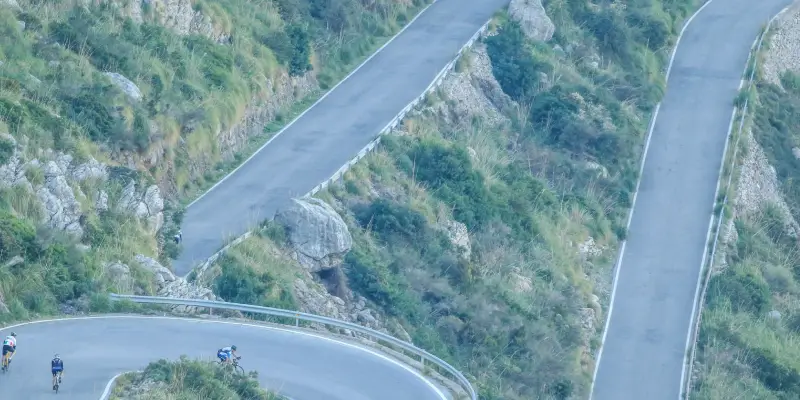
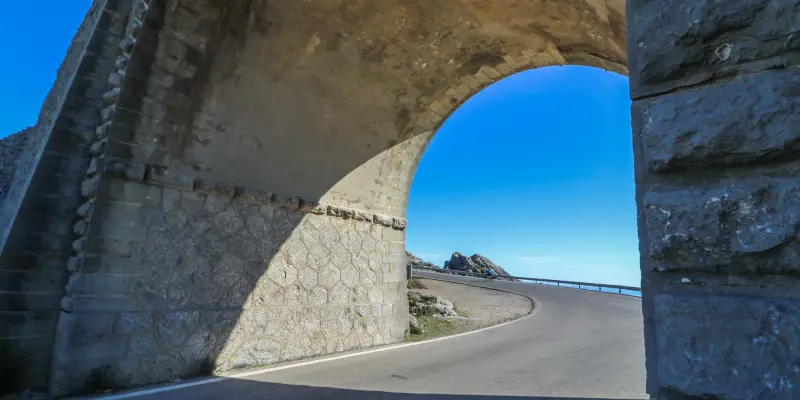
At the Coll dels Reis there is a sign marking the summit and the start of the descent The 9.5 km descent drops roughly 682 m through about 26 hairpin bends. The road is narrow and protected by low stone walls in places; riders descend through rock tunnels and past the spectacular loop‑the‑loop 270° bridge. Because cyclists must descend before climbing, it is wise to take the descent cautiously, both to learn the road and to preserve energy for the return climb. Dew in the morning can make the tarmac slippery. The road can be busy with coaches, hire cars and other cyclists between 11:30 and 15:00, so many guides recommend descending early in the morning (Mallorca Cycle Shuttle gets you there at the ideal start time).
The Climb
First Section (0 – 5 km)
The official Strava segment begins near the car park rather than at the port. Early on, the road climbs at a moderate 6–8 % through limestone walls and a short tunnel where rock meets overhead. The gradient is steady, allowing riders to find a rhythm. There are relatively few hairpins here, and the road is sheltered by pines.
Hairpin Section (5 – 9 km)
After about 5 km the road becomes more exposed and the famous hairpins begin. The gradient ramps up to around 7 – 8 %, and riders snake through successive switchbacks cut into the limestone. The scenery changes constantly, with glimpses of the turquoise sea below. The hairpins require careful pacing—try not to attack too hard early on, as the steepest section lies ahead.
Final Section (last 3 km)
Put your best smile on for the Mallorca Bike Fotos photographers in this section for your professional action pictures!
The last three kilometres of the climb are the steepest and most exposed. Gradients reach 9 – 11%, and riders traverse the 270° spiral bridge (the “tie knot”). After rounding the knot, keep pushing to the Coll dels Reis signpost about 500 m above. There is a small parking area and café at the tie knot, but no water on the climb itself—fill bottles at the port before ascending.
Key Statistics
- Distance: ~9.5 km (from the port to the summit of Coll dels Reis)
- Elevation Gain: ~682 m
- Average Gradient: ~7%
- Maximum Gradient: ~11%
A good club rider can climb Sa Calobra in 30–45 minutes; a recreational rider may take an hour or more. Pace yourself, especially on the descent and initial kilometres.
Between the turnoff to Cala Tuent and the Port, is a hotspot for accidents - whether cyclists’ hands are tired from all the braking on the descent, or whether concentration lapses or whether speed overcomes ability, a number of spills occur here. Mallorca Bicycle Rescue are often here rescuing the unfortunate. Take care!
Good to Know: Practical Tips
Cycling Sa Calobra is an unforgettable experience, but a few practical considerations will help make the ride safer and more enjoyable.
Timing and Traffic
- Start early: The road is narrow and popular with tourists. Coaches and hire cars head down from 11am. Arriving early (descending before 10 am and finishing the climb by late morning) ensures less traffic.
- Avoid peak summer: In summer its just unhealthily hot or start at dawn.
Weather and Season
- Heat: From late May to September temperatures can exceed 30 °C. Carry plenty of water; there are no refill points during the climb.
- Rain: The road becomes slippery in rain. Take care.
- Wind: The upper section is exposed, and strong winds can make it tricky.
Safety and Equipment
- Descending cautiously: The descent is steep and technical. Use both brakes, stay on your side of the road, and watch for oncoming traffic emerging from blind hairpins. Gravel and pine needles can collect in shaded corners.
- Tunnel caution: Near the bottom, a narrow rock tunnel squeezes the road. Be prepared to stop if a coach or car is coming.
- Lights and clothing: If you start early or descend in low light, use front and rear lights. Temperatures at the summit can be several degrees cooler than at the coast; carry a gilet or wind‑proof jacket.
Food and Hydration
- Water and snacks: Fill your bottles at the port before starting the climb; there is nowhere to refill until the tie knot. The climb takes longer than you might expect, so carry energy bars or gels.
- Café at the port: Port de Sa Calobra has several bars and restaurants where you can eat traditional Mallorcan dishes, salads and pasta. As expected, prices are higher and menus are basic, so some cyclists bring their own food.
Photography and Points of Interest
- Viewpoints: There are spectacular viewpoints all the way down and up. Decide whether you’re riding for a time or to enjoy the scenery.
- Professional photos: In high season Mallorca Bike Fotos position themselves on the climb and later sell photos online.
- Aqueduct and OJ Shack: A few kilometres before the Coll dels Reis an aqueduct crosses the road and there is a popular orange juice stand, a perfect place to refuel.
Why Take the Ferry?
Taking the ferry offers several advantages:
- Avoids the climb: Riders who have already tackled other Tramuntana climbs or who are pressed for time can descend Sa Calobra, enjoy the port and then return by boat.
- Scenic coastline: The boat traverses a rugged coastline, passing cliffs, caves and coves such as Cala Tuent and Sa Foradada. It provides a different perspective of the mountains and the Mediterranean.
- Bike‑friendly: Ferries are equipped to carry bikes; staff handle loading and unloading. Riders should arrive early and be prepared to lift bikes onto the deck.
Ferry information: barcoscalobra.com
Port de Sa Calobra
The Village and Facilities
Sa Calobra itself is a small port village nestled between steep cliffs. It consists of a pebbly port beach, a cluster of cafés and tourist shops, and a pathway to the Torrent de Pareis canyon. Because the village is remote, there are few services: sun loungers and water‑sports equipment cannot be rented. There are several bars and restaurants, toilets and showers (for a fee), as well as a first‑aid/nursing service in summer. Restaurants serve simple meals, and prices are higher than inland. Cyclists can park their bikes and rest or head straight to the beach to swim in clear, blue‑green water. The beach is mostly pebbles but well‑maintained.
Torrent de Pareis
Many visitors walk through a narrow rock tunnel from the port to the beach at the mouth of the Torrent de Pareis canyon. Hiking the full canyon from its source is a challenging activity requiring experience and professional guides; inexperienced cyclists should avoid attempting it alone. In July the Torrent de Pareis hosts a free classical concert that draws visitors.
Accommodation
There is no tourist accommodation in Sa Calobra itself because the area is protected. The only place to stay is the Refugi de Sa Calobra, a small refuge that accommodates up to ten people. The minimum stay is two nights and must be booked up to 60 days in advance; the flat fee is €120 per night (plus tourist tax) regardless of occupancy. Most cyclists stay in nearby towns like Sóller or Port Pollensa and visit Sa Calobra on a day ride.
Sample Itinerary for Cycling Sa Calobra
Start from Port Pollensa or Alcúdia early in the morning and ride through the Coll de Femenia or Coll de Sa Battaglia, stopping at the aqueduct/orange‑juice shack near the top.
Or take the Mallorca Cycle Shuttle to the Repsol garage in Lluc.
Descend the Coll dels Reis into Sa Calobra, taking care on the hairpins.
Refuel in the port – fill water, snack at a café, and perhaps take a quick swim.
Climb back up the 9.5 km to the Coll dels Reis, pacing yourself for the steep final kilometres. Alternatively, reserve a ferry and return to Port Sóller by boat.
Return via Puig Major or back through the Femenia/Batalla climbs to your base.
Cyclists visiting Mallorca should include Sa Calobra in their itinerary. By preparing properly, starting early, bringing sufficient water and being aware of traffic and weather, riders can enjoy a safe and memorable ascent. Whether you choose to climb back up or ferry to Port Sóller, Sa Calobra offers an experience that stays with you long after the ride ends.
Related Cycling Routes
Looking for more challenging climbs in Mallorca? Check out these other iconic routes:
- Cap de Formentor Guide - Mallorca’s most scenic coastal route with dramatic cliffside cycling and lighthouse views
- Andratx to Pollença (MA-10) Guide - The complete 60km journey through the Tramuntana mountains
- Big Daddy Challenge - Combine all the major climbs including Sa Calobra in one epic day